Artist Statement
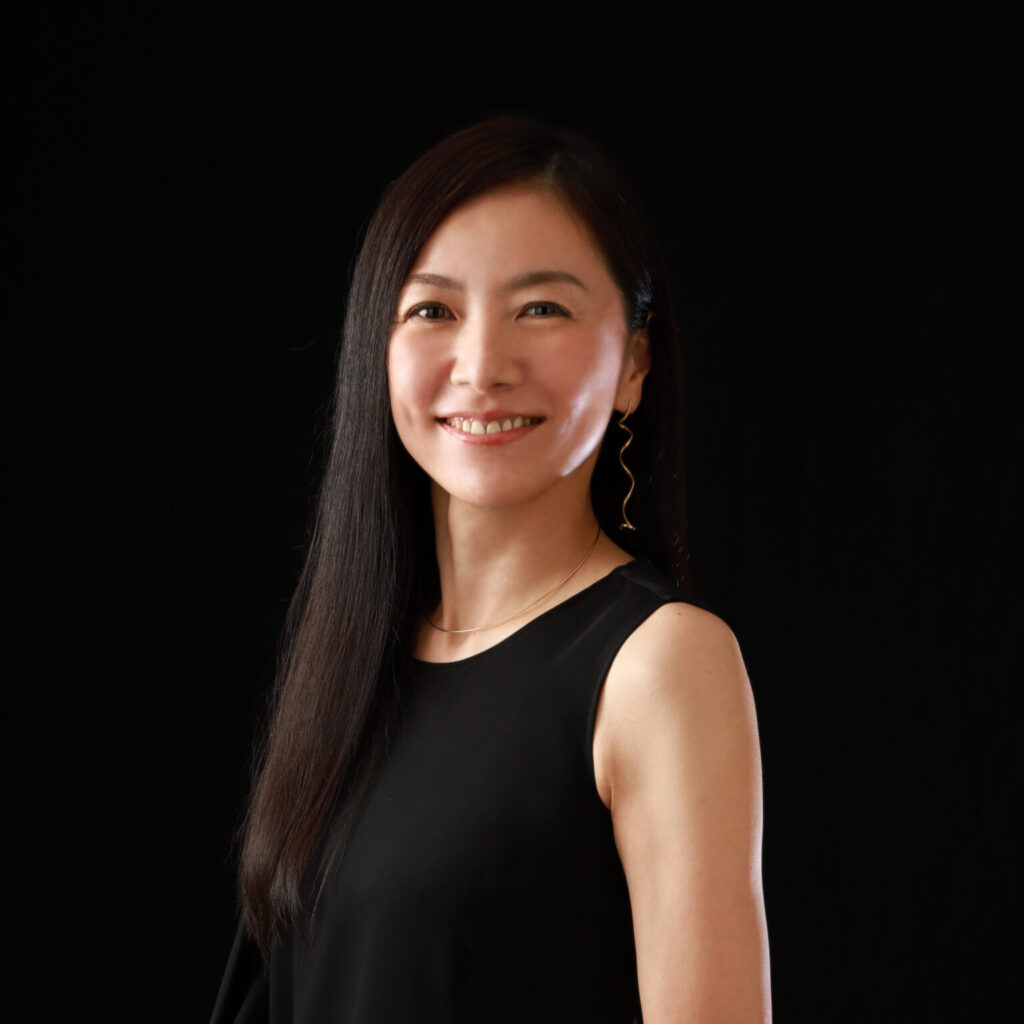
Profile
Risa Murakami is a Japanese artist whose practice is grounded in the traditional techniques and materials of Nihonga while articulating a subtle dialogue between the self and nature.
Her formative experiences with both natural and urban environments inform her enduring motif of the water surface, which functions as a mirror that reflects not only the external world but the inner life of the viewer.
Through this symbolic imagery, her work evokes cycles of life, the passage of time, and contemplative stillness.
Murakami has exhibited her work in galleries and exhibitions domestically and internationally, contributing to the evolution of Nihonga in a contemporary context and expanding her presence on the global art stage.
Concept
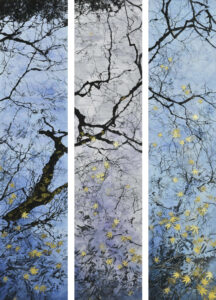
Risa Murakami is an artist who works with traditional materials and techniques of nihonga (Japanese style painting), reinterpreting them through a contemporary sensibility to depict the quiet, invisible dialogue that flows between nature and humanity.
At the core of her practice lies a deeply physical awareness of being “alive as part of nature.”
Having grown up closely connected to the natural world and later experiencing life in urban environments, her encounters with nature upon returning to it became increasingly vivid and profound.
These experiences ultimately crystallized into her consistent and central motif: the surface of water.
The water’s surface simultaneously reflects the external landscape and functions as a mirror for the viewer’s inner world.
The autumn leaves and shimmering light depicted upon it evoke cycles of life, disappearance and regeneration, and the passage of time.
Through these works, viewers are invited to reposition themselves within the greater rhythms of nature.
Using traditional nihonga materials such as hemp paper, mineral pigments, and gold leaf, Murakami layers her work with original textures and fluid techniques to visualize emotional strata that exist prior to language.
Rather than asserting a strong statement, her paintings operate through quiet resonance, gently engaging the viewer’s interior sensibilities.
While firmly grounded in the tradition of Japanese painting, Murakami’s work does not remain bound by nostalgia.
Instead, it opens toward universally shareable sensations of “tranquility” and “peace” within an international context.
It is in this openness that the contemporary significance of her practice resides.
Biography
- 1997
- The 52nd Spring Exhibition of the Japan Art Institute INTEN
- 2012
- The 67th Spring Exhibition of the Japan Art Institute INTEN
- The 97th Exhibition of the Japan Art Institute INTEN
- The 30th Ueno Royal Museum Grand Prize Exhibition
- 2017
- February 20th–25th “Risa Murakami Japanese-style Painting Exhibition” at Gallery of Hikari Ginza
- 2020
- May 18th–23rd “Risa Murakami Japanese-style Painting Exhibition” at Gallery of Hikari Ginza
- October 23rd–November 3rd Collaboration Exhibition TORY BURCH × RISA MURAKAMI at Ginza
- 2021
- Collaboration Exhibition Tokyo American Club × RISA MURAKAMI
- Collaboration Exhibition AREA Tokyo × RISA MURAKAMI
- 2022
- Collaboration Exhibition THE RITZ-CARLTON Tokyo × RISA MURAKAMI
- 2023
- Risa Murakami Japanese-style Painting Exhibition at Carrousel de Louvre in Paris
- Risa Murakami Japanese-style Painting Exhibition at IMPERIAL HOTEL Tower Tokyo